
Autonomous vehicles are moving from experimental platforms toward increasingly connected mobility systems. As vehicles take on more sensing, decision-making, and control functions, safety becomes a system-level engineering priority rather than a feature that can be assigned to one component.
For vehicle manufacturers, Tier 1 suppliers, technology companies, and system integrators, understanding how autonomous driving technologies interact is therefore essential. A specialized battery exhibition can provide part of this perspective, particularly when battery, vehicle electronics, sensing, software, and mobility technologies are presented within one industry ecosystem.
Autonomous Driving Safety Requires Multiple Technology Layers
Autonomous vehicle safety depends on the interaction of sensing, computing, communication, control, and mechanical systems. Cameras, LiDAR, sensors, electronic control units, AI algorithms, and intelligent chassis technologies all contribute to how a vehicle perceives and responds to its surroundings.
Mobility Tech Asia specifically identifies ADAS, autonomous driving technology, LiDAR, camera systems, sensor technology, AI algorithms, smart cockpits, intelligent chassis, Internet of Vehicles technologies, and traffic management platforms within its smart mobility and intelligent transport scope.
This broad technology coverage reflects an important reality for system developers: autonomous safety cannot be evaluated by examining a single sensor or software algorithm in isolation. The complete architecture must allow multiple technologies to exchange information and respond consistently under different operating conditions.
Mobility Tech Connects Sensing With Vehicle Systems
Perception technologies are central to autonomous driving because the vehicle must collect information about its environment before making decisions. Different sensing technologies can provide different types of environmental information, while processing systems interpret those inputs.
For system integrators, the key question is not simply whether a sensor can detect an object. Integration teams also need to consider how sensor data enters the vehicle architecture, how it is processed, and how the resulting decisions reach braking, steering, propulsion, and other control systems.
The official Mobility Tech Asia scope includes sensing and perception systems, ADAS, control and automation systems, and V2X and vehicle connectivity systems. This creates opportunities for technical teams to examine these technologies as interconnected parts of an intelligent mobility platform.
Battery and Power Systems Still Matter to Safety
Autonomous driving discussions often focus heavily on perception and artificial intelligence, but vehicle energy systems remain fundamental. Sensors, computing platforms, communication systems, actuators, and other electronic components all depend on stable electrical power.
Mobility Tech Asia therefore covers power batteries, PACK systems, battery management systems, drive motors, motor controllers, inverters, thermal management systems, and energy management systems alongside intelligent mobility technologies.
This combination is important because autonomous functions can increase the vehicle’s electrical and computational requirements. System designers need to understand how energy storage and power management interact with the electronic architecture supporting autonomous functions.
At a battery exhibition, these relationships can become easier to examine when battery technologies are presented alongside vehicle and mobility applications. The focus can move from battery capacity alone toward system compatibility, energy management, thermal requirements, and overall vehicle integration.
Software and AI Become Part of the Safety Architecture
Modern autonomous mobility depends heavily on software. AI algorithms process information from sensors, while software platforms coordinate vehicle functions and connect mobility systems with external infrastructure.
Mobility Tech Asia includes software toolchains, core platforms, smart mobility and fleet management systems, data and AI-enabled mobility, cybersecurity, and information systems within its digital ecosystem.
For manufacturers and integrators, this means software evaluation needs to extend beyond performance demonstrations. Reliability, communication, cybersecurity, testing, data handling, and compatibility with vehicle control systems can all influence the practical deployment of autonomous technologies.
A software platform that performs well in isolation still needs to operate reliably within the broader vehicle architecture. This makes system integration and validation critical parts of autonomous vehicle safety.
Why Testing and Integration Matter for Safety
Autonomous vehicle technologies operate in complex environments where different systems must respond within appropriate timeframes. As a result, integration teams need to consider how individual components behave when combined.
The Battery Show Asia ecosystem includes testing and inspection technologies as well as simulation and testing platforms. Its broader exhibition scope covers equipment, testing, digitalization, automotive electronics, and mobility technologies.
These capabilities are particularly relevant for companies assessing autonomous driving solutions. Testing can help identify whether sensors, control systems, software, and vehicle hardware interact as intended under defined operating conditions.
For procurement teams, supplier discussions can therefore include testing methodologies, validation capabilities, system interfaces, and technical documentation rather than focusing solely on product specifications.
The Battery Exhibition Perspective on Autonomous Mobility
The connection between batteries and autonomous mobility is becoming increasingly important as vehicles incorporate more electronics, computing power, connectivity, and automated functions.
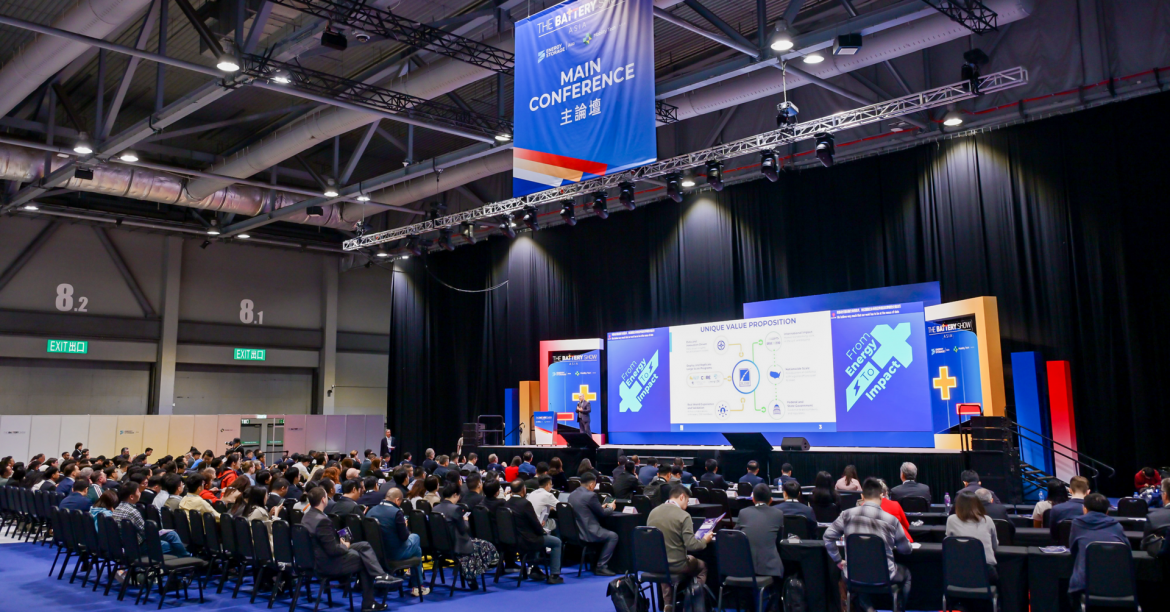
The Battery Show Asia brings together advanced battery technologies with energy storage, charging infrastructure, electric and hybrid power solutions, and new energy mobility OEMs. The 2026 event attracted more than 200 exhibitors showcasing over 1,000 technologies and products, while 15,367 professional buyers attended from 103 countries and regions. International buyers represented 62.1% of the audience.
This international environment gives manufacturers and technology suppliers an opportunity to examine developments across multiple parts of the electrification and mobility supply chain.
The event’s 147 high-level conference sessions also brought together 132 industry leaders and technical experts, with discussions covering e-mobility technologies, market trends, policy interpretation, industry developments, and technology breakthroughs.
What System Integrators Should Evaluate
When evaluating autonomous mobility technologies, system integrators can consider several layers simultaneously. Sensing performance is one factor, but connectivity, processing, control, energy consumption, thermal management, cybersecurity, and testing requirements can be equally important.
Supplier evaluation should also consider whether technologies can integrate into existing vehicle architectures. Interface compatibility, customization capabilities, technical support, testing resources, and production readiness can affect the feasibility of a large-scale deployment.
Mobility Tech Asia is designed to bring together new energy vehicles, charging infrastructure, powertrain technologies, autonomous driving, smart transportation, automotive electronics, and future mobility solutions. This makes the event relevant to companies evaluating complete mobility ecosystems rather than individual components.
The Battery Show Asia and the Future of Safe Mobility
Autonomous vehicle safety will increasingly depend on the coordinated operation of hardware, software, energy systems, sensing technologies, and intelligent control. The boundaries between battery technology, automotive electronics, AI, connectivity, and mobility infrastructure are becoming less distinct.
That broader relationship is reflected in The Battery Show Asia, where battery, energy, and new energy mobility technologies are brought together. The official 2026 report highlights the event’s role in connecting global exhibitors, buyers, technology experts, and industry leaders across the energy and mobility supply chain.
The next edition will return to AsiaWorld-Expo in Hong Kong from July 14–16, 2027, alongside Energy Storage & Power Asia and Mobility Tech Asia. The event will continue to cover new energy mobility, smart transportation, charging and energy infrastructure, powertrain systems, and intelligent mobility technologies.
For companies working on autonomous and electrified vehicles, the most valuable industry insight is that safety is not created by one technology. It emerges from effective integration among sensing, computing, software, power, control, and vehicle systems. A cross-industry platform such as The Battery Show Asia can help engineering and business teams understand these connections and identify technologies and partnerships relevant to the next generation of mobility.
