
Food manufacturers must maintain strict quality standards while managing faster production speeds and increasingly complex product formats. Detecting foreign materials, packaging issues, and unexpected product variations has become more challenging as processing lines become more automated.
Visual checks and traditional detection methods can support basic quality control, but they may not identify every potential issue during high-volume production. X-ray inspection provides manufacturers with an additional layer of monitoring by analyzing product characteristics that cannot always be identified externally.
Easyweigh provides industrial inspection solutions that help food producers strengthen quality control workflows through automated technologies. By integrating advanced inspection methods into production environments, manufacturers can improve consistency while reducing the risks associated with undetected product problems.
Quality Control Problems That Require Advanced Inspection Methods
Food production involves multiple stages where quality issues can appear. Raw materials may contain unwanted materials, processing equipment may create contamination risks, and packaging operations may introduce defects before products reach customers.
Many manufacturers rely on different inspection technologies depending on their production requirements. However, some materials have similar appearances to food products, making visual inspection difficult. Certain contaminants may also be located inside sealed products where surface inspection cannot provide sufficient information.
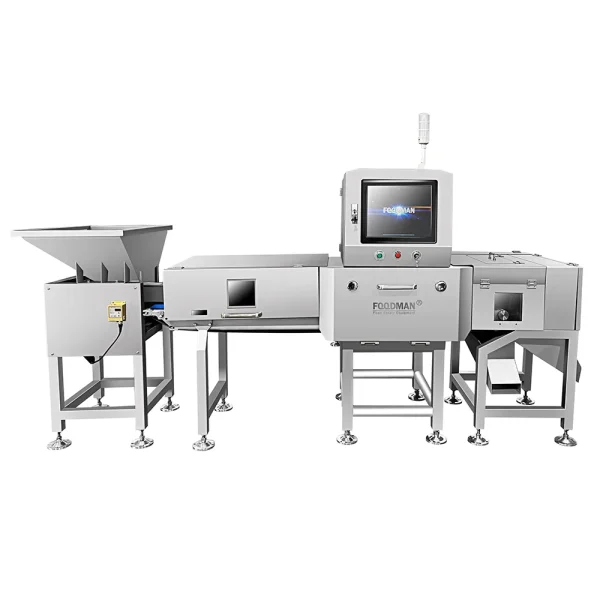
The use of food X-ray inspection equipment allows manufacturers to examine products without opening packages or interrupting production. The system can identify differences in density between the product and unwanted materials, supporting more effective quality checks.
Unlike manual inspection, automated X-ray systems can operate continuously during production. This capability is particularly valuable for companies managing large output volumes where consistent monitoring is necessary.
How X-Ray Technology Supports Food Quality Decisions
X-ray inspection works by sending controlled X-ray signals through products as they pass through an inspection area. Sensors capture image information, and software evaluates the results to identify unusual patterns related to foreign materials or product conditions.
The technology supports non-destructive inspection, meaning products can remain sealed and continue through the manufacturing process after evaluation. This makes it suitable for packaged foods where opening products for inspection would create waste.
Modern food X-ray inspection equipment can be integrated with automated production lines, allowing inspection results to connect with rejection systems. When an issue is detected, affected products can be removed automatically according to predefined settings.
This automated response reduces dependence on manual decisions and helps production teams maintain stable quality control procedures. Operators can focus on managing production performance while the system performs continuous monitoring.
Integrating Inspection Into Different Manufacturing Stages
The most effective inspection strategy depends on where manufacturers choose to place inspection points within their workflows. Some companies inspect ingredients before processing, while others evaluate finished products after packaging.
Inspection before processing can help identify problems early and prevent unsuitable materials from entering later production stages. This approach may reduce waste by addressing issues before additional resources are invested.
Final product inspection provides another control point before products leave the factory. Packaged foods, ready-to-eat meals, and processed products can be examined while maintaining packaging integrity.
Different production environments require different system configurations. Factors such as product size, packaging material, production speed, and manufacturing conditions influence how inspection equipment should be applied.
Easyweigh develops solutions designed to support manufacturers looking to combine automation with dependable inspection processes. The company focuses on helping businesses improve production control through technologies that fit practical factory requirements.
Improving Inspection Reliability Through Process Management
Successful X-ray inspection depends on more than installing equipment. Manufacturers need to consider how products move through the line, how systems are maintained, and how operators manage inspection results.
Stable product positioning is important because inconsistent movement or overlapping products can affect image analysis. Proper conveyor design and workflow planning help create more reliable inspection conditions.
Factory environments also influence equipment operation. Food processing facilities often require frequent cleaning and operate under demanding conditions involving moisture, temperature changes, and continuous production cycles.
Regular maintenance and operator training support long-term performance. Teams that understand system functions can respond quickly to inspection alerts and adjust production procedures when necessary.
Data management can further improve quality control. Reviewing inspection information helps manufacturers identify recurring issues and improve production processes over time.
Creating Stronger Quality Control Systems With Automated Inspection
X-ray inspection has become an important tool for food manufacturers seeking greater control over product safety and consistency. It supports continuous monitoring while allowing companies to inspect products without damaging packaging or slowing production.
A successful implementation requires manufacturers to consider their specific production challenges, product characteristics, and workflow objectives. The right inspection strategy should support existing operations while improving visibility into potential quality issues.
Easyweigh helps food producers develop more reliable inspection workflows by combining automation knowledge with industrial inspection solutions. Through better process control, manufacturers can reduce risks and build stronger confidence in their finished products.
As food production continues to become more automated, inspection technology will play an increasingly important role in helping companies maintain quality standards. A well-designed X-ray inspection process allows manufacturers to improve efficiency while protecting both consumers and brand reputation.
