
Procurement teams often classify mechanical belt splices as routine hardware consumables, yet joint failure remains a primary driver of unscheduled plant shutdowns. Sourcing the proper joint requires a clear understanding of mechanical belt behavior under continuous operational strain. Industrial conveyor lines cannot maintain peak throughput if mechanical splices fail prematurely.
Specifying robust conveyor belt solutions demands looking past initial unit pricing to calculate total operating longevity. Evaluating fastener profiles, joint flexibility, and operational safety prevents recurring belt tracking issues and expensive line interruptions. Successful procurement hinges on systematically aligning hardware specifications with actual operating conditions.
Matching Fastener Geometry to Belt Construction and Pulley Diameters
Belt carcass thickness and tensile ratings dictate fastener size constraints. Selecting a fastener with insufficient reachback causes premature carcass tearing under cyclic tension, while an oversized fastener creates excessive joint stiffness. Mechanical engineers must cross-reference working tension ratings with belt manufacturers’ specifications before issuing purchase orders.
Pulley diameter limitations represent another critical specification threshold that buyers frequently overlook. Fasteners flexing around undersized terminal pulleys experience acute fatigue stresses that snap wire legs and loosen hinge pins. Carded wire hooks offer low-profile contours that wrap smoothly around tight rollers without gouging belt support plates.
Partnering with a dedicated conveyor belt fastener manufacturer enables procurement teams to access precise engineering load charts. Direct technical consultation verifies that hook leg pitch and wire gauges withstand repetitive wrapping forces across drive pulleys. Accurate sizing protects both the mechanical joint and downstream conveyor rollers.
Environmental Demands and Metallurgical Selection
Operating atmospheres dictate the metallurgical composition required for dependable joint longevity. Standard galvanized steel fasteners perform adequately in dry package handling, but corrode rapidly in humid packaging centers, commercial laundry facilities, or chemical processing plants. Severe moisture intrusion deteriorates hinge pins and causes catastrophic joint separation.
Stainless steel alloys provide the necessary barrier against oxidation, harsh cleaning chemicals, and abrasive wear. Grade 304 stainless steel resists moisture and organic acids, making it a reliable standard for general manufacturing and food packaging lines. Extreme chemical exposure, maritime transport, or saline washdowns demand surgical-grade 316 or 316L stainless steel alloys.
Specialized engineering at Intake incorporates targeted alloys into their fastener lines to resist aggressive chemical corrosion and continuous moisture exposure. Metallurgical formulations developed by their team prevent stress cracking across hook legs, ensuring stable mechanical continuity throughout continuous washdown cycles. Choosing targeted metallurgy safeguards capital equipment against unexpected environmental degradation.
Modern conveyor belt solutions must also maintain surface hardness without sacrificing hook ductility during crimping. Excessive wire hardness leads to brittle fracturing during installation, whereas overly ductile wire deforms under heavy tension. Balanced heat treatment ensures that hooks embed firmly into the carcass without puncturing internal tension cords.
Tooling Integration and Installation Ergonomics
Installation efficiency directly impacts total plant downtime during scheduled belt replacements or emergency repairs. Mechanical lacing offers significant labor savings compared to vulcanization, which requires cumbersome heating presses and extended curing windows. Maintenance technicians can install mechanical splices within minutes if proper application tools are accessible on-site.
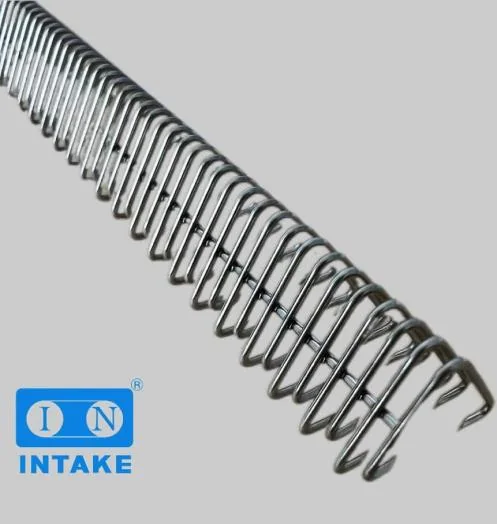
Carded wire assemblies provide pre-aligned hook strips that slide effortlessly into manual or hydraulic lacers. Individual hooks remain securely positioned on rigid backing cards, eliminating manual spacing errors and ensuring uniform clinch depth across the belt width. Technicians achieve straight, perpendicular joint edges that track true through conveyor beds.
Production facilities at Intake supply integrated mechanical fasteners alongside matching manual and hydraulic lacer machines to optimize clinch accuracy. Hydraulic lacing presses deliver uniform pressure across wide belt splices, reducing technician fatigue during high-volume plant overhauls. Standardized lacing equipment ensures consistent crimp geometry regardless of operator experience.
Sourcing through an experienced conveyor belt fastener manufacturer ensures seamless interoperability between fasteners, hinge pins, and insertion equipment. Mismatched installation combs or worn lacer jaws cause uneven hook compression, producing weak joints prone to pull-out failures. Procuring matched tooling sets establishes repeatable maintenance standards across all operational shifts.
Evaluating Production Capabilities and Supply Chain Transparency
Global supply chain disruptions require purchasing managers to scrutinize vendor production capacity and fulfillment reliability. Distributors operating with thin stock margins frequently delay critical maintenance shipments, amplifying plant downtime costs. Direct factory relationships provide vital transparency regarding inventory levels, production schedules, and dispatch lead times.
Structured as an established global provider, Intake maintains manufacturing facilities that supply standardized and custom-engineered fastening configurations to worldwide industrial partners. Factory-direct sourcing enables flexible order quantities starting from fifty boxes, accommodating both trial maintenance batches and enterprise-scale replenishment programs. Direct production oversight guarantees batch-to-batch metallurgical consistency and stringent dimensional tolerances.
Qualified buyers should require a conveyor belt fastener manufacturer to provide certified material test reports and pull-out strength data. Verifying wire tensile strength, corrosion ratings, and pin durability eliminates substandard imitations that flood generic industrial marketplaces. Thorough vendor auditing protects capital conveyor assets and enforces strict workplace safety protocols.
Strategic Procurement Criteria for Conveyor Reliability
Balancing mechanical compatibility, operating chemistry, and total lifecycle costs forms the core of effective fastener procurement. Treating fasteners as strategic components rather than disposable hardware yields substantial operational dividends over years of continuous production. Smart procurement workflows consistently emphasize dimensional precision, proven metallurgy, and compatible lacing equipment.
Investing in verified conveyor belt solutions minimizes unbudgeted line stops, simplifies emergency splice repairs, and extends conveyor belt operating life. Sourcing from proven manufacturers equips maintenance teams with the exact hardware necessary to sustain uninterrupted industrial output. Sound purchasing decisions ultimately protect operational margins and preserve plant productivity.
