
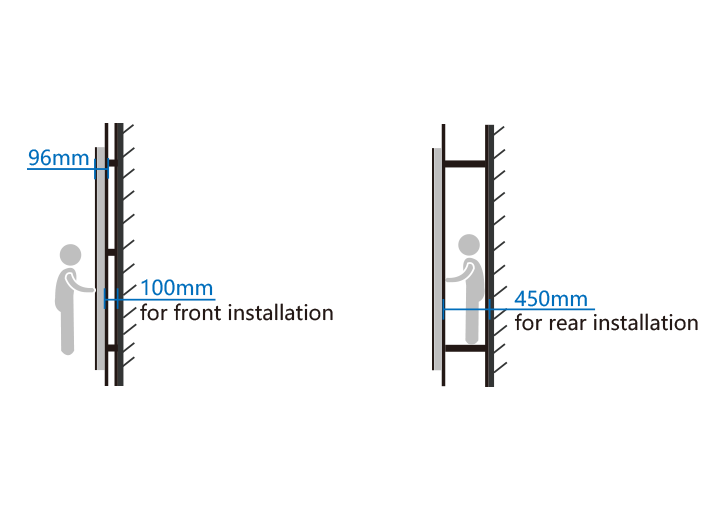
Successful outdoor display projects depend on much more than selecting suitable hardware. Site conditions, structural capacity, electrical access, local permissions, and commissioning all influence how smoothly installation proceeds. For buyers assessing outdoor LED display screen price, installation requirements should be considered alongside the equipment quotation. Ledman’s N Series is designed with flexible maintenance access, supporting both full front installation and front-and-rear maintenance, which can be useful where site conditions vary.
Begin With A Detailed Site Survey
Before equipment arrives, the installation team should assess the proposed location carefully. Wall condition, mounting height, viewing distance, surrounding structures, wind exposure, access routes, and available working space all affect the installation plan.
Electrical infrastructure deserves equal attention. Power capacity, cable routes, distribution equipment, grounding arrangements, and protection devices should be reviewed before the display is mounted. Early identification of electrical limitations can prevent expensive changes later.
Local regulations may also influence the project. Outdoor signage can require planning permission, building approval, traffic-related review, or restrictions concerning brightness and operating hours. These requirements should be clarified before construction begins.
Develop The Structural Design
Weight distribution and wind loading are central considerations for an outdoor display screen. The supporting structure must be designed according to the display dimensions, mounting method, local environmental conditions, and applicable engineering standards.
Mounting location affects the structural approach as well. A façade-mounted installation may require different reinforcement from a freestanding roadside structure, while elevated installations can introduce additional access and safety considerations.
Engineering drawings should identify mounting points, support members, access areas, and service routes. Clear documentation gives installers a consistent reference and helps other contractors coordinate their work.
Plan Electrical And Data Connections
Power distribution should match the display’s electrical requirements rather than relying on existing infrastructure without verification. Cable sizing, circuit separation, protection devices, and distribution positions all deserve attention during planning.
Data connectivity also needs a defined route. Controllers, network equipment, signal processors, and monitoring systems should remain accessible for testing and future servicing.
Cable management affects both appearance and maintenance. Protected routes can reduce exposure to weather and physical interference while keeping service areas easier to inspect.
Prepare Installation Access
Installation logistics can become challenging when the display is positioned high above ground or inside a restricted site. Delivery vehicles, lifting equipment, temporary barriers, and technician access should be planned before the installation date.
Maintenance access deserves consideration at the same stage. Equipment that cannot be reached conveniently may increase future service time and labour costs.
The N Series offers full front installation as well as front-and-rear maintenance. This flexibility allows the installation approach to be adapted to the available service space rather than relying on one fixed access method.
Commission The Display System
Physical installation marks only the middle of the process. Once panels, power systems, and signal connections are in place, technicians need to check image uniformity, brightness, colour performance, signal stability, and control-system operation.
Content should also be tested under actual operating conditions. Scheduling, playback formats, remote management, and emergency shutdown procedures may need verification before public use.
A structured commissioning record can document test results, configuration settings, equipment references, and maintenance procedures. Such records make later troubleshooting more straightforward.
Review Costs Beyond The Hardware
Installation expenses can include structural engineering, electrical work, lifting equipment, transportation, permits, commissioning, and site preparation. These items may not appear within the initial equipment quotation.
Consequently, comparing the outdoor LED display screen price alone can produce an incomplete financial picture. A lower hardware figure may be offset by more complex installation requirements or additional site work.
A useful project budget separates equipment from construction and operational expenses. This provides a clearer view of the investment before contracts are finalised.
To avoid budget overruns, request a detailed line‑item cost breakdown from the supplier before signing, covering not just the display panels but also shipping, crane hire, scaffolding, electrical upgrades, network drops, and commissioning tests. Equally important, factor in recurring costs such as annual maintenance contracts, replacement parts, and potential software licensing fees—these can add significantly over a 3‑to‑5‑year period. A quick total‑cost‑of‑ownership (TCO) estimate often shows that a slightly higher‑priced screen with simpler mounting requirements and lower servicing needs may actually be cheaper in the long run.
Conclusion
Outdoor LED installation is a coordinated engineering process rather than a simple mounting task. Site surveys establish practical constraints, structural planning addresses physical loads, electrical preparation supports stable operation, and commissioning verifies the finished system. Maintenance access should also influence equipment selection from the beginning. With front installation and front-and-rear maintenance options, the Ledman N Series demonstrates how serviceability can become part of the installation strategy. Considering these factors alongside outdoor display screen specifications gives buyers a more realistic understanding of project scope and long-term costs.
